头部背景图片

Does Vision Counting machine need customization?

2024-12-12

Does Vision Counting machine need customization?
Do you often feel confused about why your vision counting machine isn't performing well? Perhaps it's because you’re using the standard counter!

“Why don't you have the counting machine in stock like the other companies?”

We also hope to have more stock in our warehouse; however, most counting machines require customization. While standard models can significantly reduce procurement workload and costs, for visual counting machines, we can only implement standard counting techniques and logic. The mechanical structure and applications are often tailored to specific counting requirements.
vision counting and packing machine

Reasons for Customization of Counting Machines:

1. Different products have different characteristics:
A. Fluidity and friction force also will influent the option of the vibration plate material, such as Aluminum alloy, nylon, raindrop, etc. This also affects the vibration plates' level number, incline, and length. For rubber parts, we usually use raindrop plates, with size and spacing selected based on actual testing conditions.
B. The fragility of the product impacts the drop height and the selection of counter materials.
C. If the product is too small or easily caught, we may need to redesign areas with large gaps or potential sticking points. This might involve using seamless, precision-machined parts.
D. Round products are easy to roll, so valves need to be added to ensure accuracy when batch counting(Indivdel the bulk order to small packs).
E. Products are easy to stick,a rolling brush may be necessary.

2. What size products you want to be compatible with will influence the camera lens's choice and the width of the vibration plate, otherwise, the accuracy of the counting may be significantly affected.

3. Application Scenarios
A. Does the tailing material need to be counted?
B. Need to count the total quantity or perform batch counting by target quantity?
C. Auto-packaging or Semi-auto packaging?
D. When inventory counting in the warehouse, do you usually move the counter across different racks, or do you consolidate work orders for a unified batch count?

A small change can lead to adjustments in the counting solution, including modifications to the mechanical structure and software programs. The truth lies in the details. At TheOne, we are dedicated to creating visual counting machines that meet our customers' real needs. Our technical team includes FPGA engineers, software engineers, and mechanical structure engineers, ensuring comprehensive support for your requirements.

automatic counting machine

Tell us your demands and we will customize a unique visual counting machine for you.

Sausage Vision Counting Machine

2024-12-12

Sausage Vision Counting Machine

Some people may say that a WEIGHT counting machine is enough to count sausages, so is it necessary to spend a relatively higher cost on a VISION counting machine?

vision counting and packing machine


I say, YES! The sausage counting and packaging really requires a more advanced one —— the vision counting machine.
The weight counting machine counts based on conversion between unit weight and total weight.
The vision counting machine has nothing to do with weight and directly uses high-speed industrial cameras for counting.

The video below proves my point.


In the video, set the vision counting machine to 20 pieces/bag and start counting.Each package was manually received and placed on a counting scale for review. The 4 packages that the counting scale showed were not 20 pieces were manually checked and found to be actually 20 pieces, indicating that the counting machine counted more accurately.

Why does this happen? The fillings of meat sausages vary in weight and volume, such as meat grains, corn kernels, etc., resulting in large individual weight differences. When the accumulated weight difference exceeds the minimum single weight, a counting error occurs, resulting in inaccurate weight counting.

In the actual test process, it was found that if the weight was used for counting, there would be a certain amount of counting error in about 3-4 out of every 35 packages. In order to avoid consumers complaining about lack of materials, companies would rather give more than less. This adds additional costs to the company.

In summary, sausage counting and packaging must use the vision counting machine. It only requires a slightly higher initial investment, but the cost of using a vision counter is lower, the risk is also lower. It can reduce customer complaints and improve your brand reputation.

Silicon Chips vision Counting Machine

2024-12-12

Silicon Chips vision Counting Machine

Recently, CRRC Times Semiconductor settled in Hefei, Anhui.

Semiconductors are a national strategic emerging industry and an important support for the high-tech field. The cooperation between CRRC and Hefei will surely inject new momentum into the semiconductor industry.


Chips are high-tech, high-value products. Chips can be counted accurately, which is important to both buyers and sellers.
THE ONE chips vision counting machine can count the chip size as small as 1*1.5mm. A high-speed industrial camera is used to scan falling objects at a scanning speed of 10,000 times per second and count accurately in real time.

chips vision counting machine


THE ONE chips vision counting machine is compact and desktop-style. Different from the traditional PLC control system, THE ONE chips vision counting machine is controlled by FPGA, making counting more reliable.

THE ONE chips vision counting machine has stronger scalability. It can count the total number and perform target counting and separate into small bags. Equipped with a desktop small packaging machine, the materials are automatically bagged and sealed after the counting is completed.

Hefei THE ONE Electronic Technology Co.,LTD helps semiconductor chip manufacturers improve counting and packaging efficiency and accuracy. Welcome to our factory to trial the machine!

Why do warehouse counters love vision counting machines

2024-12-12

Why do warehouse counters love vision counting machines

The main function of the warehouse is material management to ensure the smooth progress of production and ensure that resources are not wasted.

warehouse counter


It is mainly reflected in
1. Count incoming materials in place to avoid losses caused by insufficient materials
2. Control the time of receiving materials to ensure timely receiving. Receiving materials too early will cause accumulation at the production site, while receiving materials too late will affect the production progress and cause production to stop waiting for materials
3. Receive accurate quantities of materials to avoid waste due to excessive materials, and complicated and time-consuming procedures for replenishing materials due to insufficient materials, resulting in waste of working hours
4. The consistency of accounts, cards and materials is the pursuit of warehouse management. How to achieve this? You must keep counting. Only by counting materials accurately can you ensure that the accounts, cards and materials are completely consistent


Counting small materials is a major challenge in warehouse management, and small parts counting machines can accurately count most small granular materials such as screws and nuts, capacitors, resistors and other electronic accessories, connectors, etc. This is why warehouse counters love vision counting machines.

warehouse vision counting machine


Our company has developed different warehouse vision counting machines specifically for various scenarios of warehouse material counting, such as:
1. For large-volume incoming materials, to verify the total number or quantitative counting, you can use our conventional vision counting machine VB series
2. For a wide variety of materials that need to verify the total number, use the VST model that does not require learning to count the total number. If you want to count small batches of quantitative counting, choose the VST model that does not require learning to count quantitative counting. The learning-free model does not require learning, does not require switching material scheme, and can count by pouring
3. For a wide variety of materials, according to the material requisition form, take and use as you go, the quantity is not fixed, and the number of each type of count is not large, you can use a push-type warehouse machine, which has stronger compatibility, does not require learning, does not require switching material scheme, can count by pouring, has power supply, and is small and movable


The warehouse vision counting machine uses high-speed industrial cameras and advanced recognition algorithms to count items quickly and accurately, avoiding under- or over-collection, and facilitating scientific and precise management of warehouses.

What is the automatic bending Angle measurement system of CNC bending machine?

2024-12-06

The accurl automatic bending Angle measurement system of CNC bending machine is a system used to measure and adjust the bending Angle of CNC bending machine. It usually consists of sensors, data acquisition devices, control systems and display devices.


The sensor is usually an Angle sensor installed on a CNC bending machine to measure the Angle change during the bending process in real time. These sensors can be photoelectric sensors, laser sensors or displacement sensors, etc., which can accurately detect the bending Angle of the workpiece.


The data acquisition device is responsible for receiving the Angle data measured by the sensor and transmitting it to the control system for processing and analysis. These data acquisition devices usually output measurement results in the form of digital signals.


The control system is the core of the whole automatic bending Angle measurement system, which is responsible for receiving and processing the measured Angle data, and comparing and adjusting based on the preset bending parameters. The control system usually adopts microprocessor or embedded system to realize automatic control and adjustment.

cnc-press-brake

Display devices are used to present measurement results to operators or engineers in an intuitive manner. Common display devices include liquid crystal displays or computer screens that display measured Angle values, graphical representations, or other relevant information to help the operator make immediate judgments and adjustments.


Through the automatic bending Angle measurement system of the CNC bending machine, the operator can monitor the bending Angle of the workpiece in real time, accurately control and adjust the working parameters of the CNC bending machine to meet the precise processing requirements, improve production efficiency and product quality. This kind of automation system can greatly simplify the operation process, reduce the human error, and improve the production efficiency and precision.

Welcome to consult more bending machine related knowledge!

Advantages And Application Areas Of Color Sorters For Plastic Materials

2024-11-26

In the modern era of recycling and waste management, the Plastic Color Sorting Machine and Plastic Polymer Sorter have emerged as essential tools in improving efficiency and accuracy in the sorting process. These machines play a crucial role in separating various types of plastic materials based on their colors and polymer types, leading to better recycling outcomes. Whether it’s distinguishing between PET and non-PET materials, or sorting HDPE, PP, PVC, and other polymers, these machines have become indispensable in industries that deal with plastic recycling.
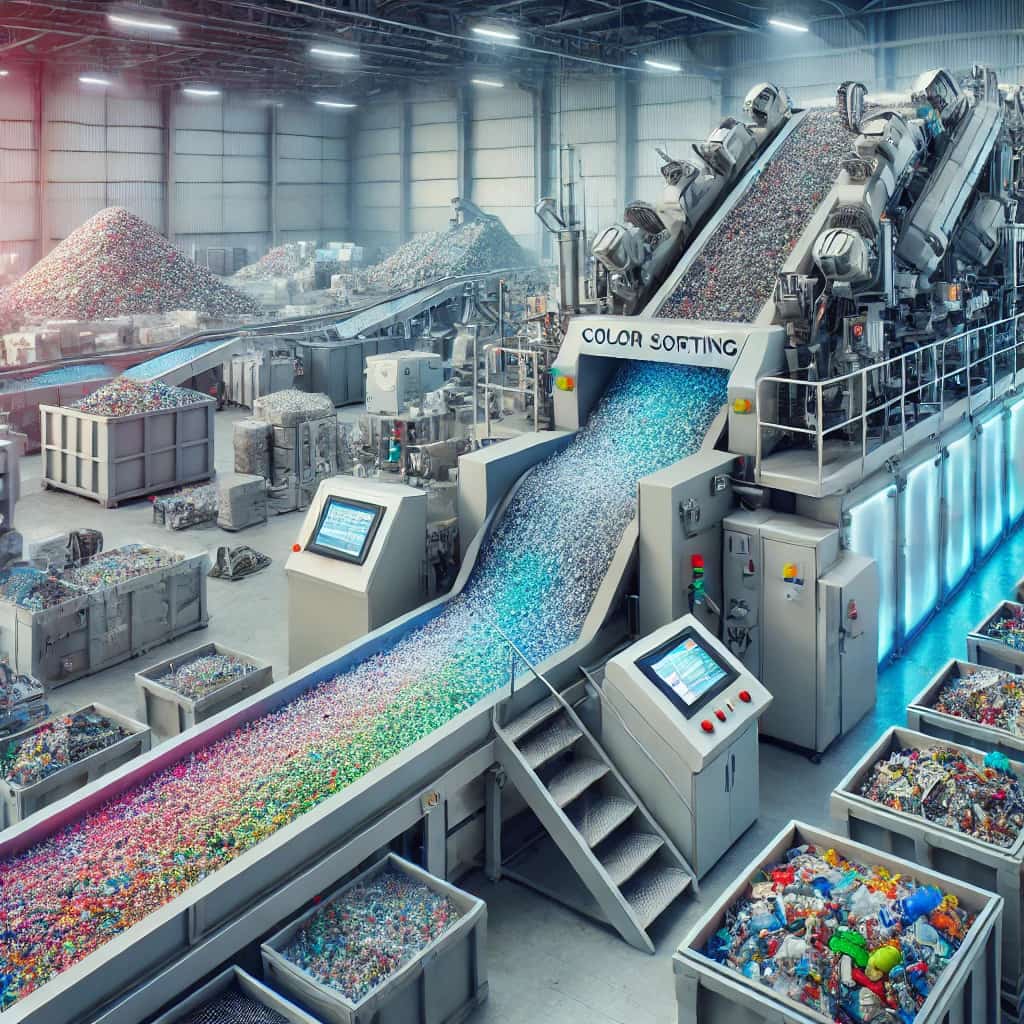


Key Features of Plastic Color Sorting Machines


Plastic color sorting machines are built with advanced technology designed to identify and differentiate between different types of plastics. The following are some of the most important features:


1. High-Precision Optical Sensors:

These machines are equipped with sophisticated optical sensors capable of detecting subtle differences in plastic materials based on color, transparency, and chemical composition. This precision ensures that even plastics with similar visual characteristics, such as HDPE and PP, can be accurately sorted.

2. Automated Processing:

Unlike traditional manual sorting, which is labor-intensive and prone to human error, plastic color sorting machines use automation to process large volumes of plastic quickly and accurately. This not only speeds up the sorting process but also reduces labor costs and increases efficiency.

3. Multi-Stream Sorting:

Some machines are capable of sorting multiple types of plastics in a single pass, differentiating between PET, HDPE, PVC, PP, and more. This versatility makes them suitable for use in recycling facilities dealing with mixed plastic waste streams.

4. Customization and Adjustability:

Plastic color sorting machines can often be customized or adjusted to suit the specific needs of a recycling plant. Whether it’s sorting by color, polymer type, or transparency, users can program the machine to focus on specific materials or grades, ensuring optimal recovery rates.

5. Energy Efficiency:

Modern plastic sorting machines are designed to minimize energy consumption, using smart technology to optimize operations. This reduces operational costs and lowers the environmental impact, making them more sustainable over the long term.


The Benefits of Using a Plastic Color Sorting Machine


Implementing a plastic color sorting machine in the recycling process offers several substantial benefits:


1. Improved Sorting Accuracy


Perhaps the most significant advantage is the increase in sorting accuracy. Manual sorting often leads to mistakes, as different types of plastics can be difficult to distinguish by eye. Optical sorting technology, however, uses sensors to identify even minute differences in color and material composition, ensuring a higher degree of precision.


For example, in recycling facilities that process beverage bottles, PET and HDPE bottles often get mixed together. A plastic sorting machine can easily distinguish between these two materials based on their color and physical properties, separating them for more effective recycling.


2. Increased Efficiency and Throughput


Plastic sorting machines significantly increase the speed at which materials can be processed. Human workers might be able to sort a few hundred kilograms of plastic per day, but automated machines can process several tons of plastic in the same amount of time. This increased throughput allows recycling facilities to handle higher volumes of waste, leading to greater profitability and a larger positive impact on the environment.


In practice, a plastic sorting machine can handle complex waste streams, such as post-consumer plastic from households or industrial packaging waste. For example, a facility tasked with recycling automotive plastics will face a wide variety of plastic types, from ABS to PP. A plastic color sorting machine will help sort these materials faster and more efficiently than manual methods ever could.


3. Reduction in Labor Costs


One of the key economic advantages of using a plastic sorting machine is the reduction in labor costs. Since the machine performs much of the work automatically, fewer staff members are needed to oversee the sorting process. This frees up workers to focus on other tasks, reducing overall costs for the recycling facility.


Moreover, automation reduces the risk of injury associated with manual sorting, as workers are no longer exposed to hazardous materials or repetitive strain injuries caused by sorting large volumes of plastic by hand.


4. Higher Quality Recycled Plastic


By improving sorting accuracy, plastic sorting machines contribute to producing higher-quality recycled plastic. When different types of plastic are mixed together, the quality of the recycled material is compromised, limiting its use in new products. For instance, if PVC is mixed with PET, the resulting recycled material may not meet the standards required for food-grade packaging or other high-value applications.


With a plastic color sorting machine, plastics are sorted more accurately, resulting in purer batches of material that can be used to create higher-quality recycled products. This improves the value of the recycled material and increases the overall sustainability of the recycling process.


5. Environmental Impact


Effective sorting not only leads to better recycling outcomes but also helps reduce environmental harm. By properly sorting plastics, recycling plants can divert more materials from landfills, reducing pollution and conserving resources. Furthermore, improved recycling rates help reduce the need for virgin plastic production, which is associated with high energy use and greenhouse gas emissions.


Use Cases of Plastic Sorting Machines


1. PET Bottle Recycling:

In many countries, recycling centers deal with vast quantities of plastic bottles, primarily made from PET. Sorting PET bottles from other types of plastic, such as HDPE, is crucial to maintaining the quality of recycled plastic. The introduction of plastic color sorting machines has improved the efficiency of PET recycling by automatically separating PET from other materials like caps, labels, and different polymers.

2. E-Waste Recycling:

In the electronics industry, e-waste recycling involves handling a complex mix of plastics, metals, and other materials. Plastic sorting machines can distinguish between different types of plastic found in electronic devices, such as ABS and PC, making it easier to recycle these materials effectively.

3. Mixed Plastic Waste Management:

Municipal recycling facilities often receive mixed plastic waste from households, which may include a variety of plastics such as PVC, PP, and HDPE. Plastic color sorting machines help efficiently process these waste streams, reducing contamination and ensuring that each type of plastic is properly recycled.


Real-World Case Study: European Plastic Recycling Facility


A European plastic recycling facility recently installed an advanced plastic color sorting machine to handle mixed plastic waste from packaging. The machine was programmed to differentiate between PP, HDPE, and PET plastics. Since its installation, the facility has seen a significant improvement in its sorting efficiency, processing up to 30% more material each day while reducing contamination rates by 25%.


By automating the sorting process, the facility has also been able to reduce its labor costs by 15%, while the quality of the recycled plastic has improved to the point that the company now supplies higher-grade recycled materials to the automotive and consumer goods industries.


Plastic color sorting machines have revolutionized the recycling industry by increasing accuracy, efficiency, and the quality of recycled materials. From separating PET bottles to handling complex e-waste streams, these machines provide a practical solution to one of the most pressing challenges in modern recycling. They reduce the need for manual labor, improve the purity of recycled plastics, and contribute to more sustainable waste management practices. As recycling efforts continue to expand worldwide, the adoption of plastic sorting machines is set to play an increasingly vital role in creating a circular economy for plastics.
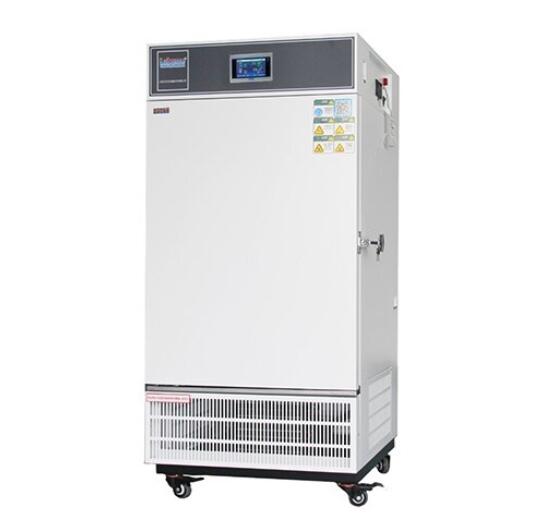
What is a Stability Chamber and How Does It Work?

2024-11-22

A Stability Chamber, also known as a Stability Test Chamber, is a specialized piece of equipment designed to create controlled environmental conditions for testing the stability and durability of products. These chambers are essential tools in industries such as pharmaceuticals, cosmetics, food and beverage, and electronics, ensuring that products meet regulatory and quality standards.


Functions of a Stability Chamber

The primary purpose of a Stability Chamber is to simulate various environmental conditions, such as temperature and humidity, over extended periods. This allows manufacturers to observe how their products react to environmental stressors like heat, cold, moisture, and light. Stability Chambers are equipped with advanced temperature and humidity control systems to maintain precise conditions, often following international guidelines like ICH Q1A for stability testing.

Key features include:

1.Temperature Control: Ranges typically from 10°C to 60°C.
2.Humidity Control: Adjustable levels between 20% to 95% relative humidity.
3.Uniformity: Ensures consistent conditions throughout the chamber.
4.Data Logging: Real-time monitoring and recording of testing conditions.

Applications of Stability Test Chambers

1.Pharmaceuticals: Conducting stability studies to determine drug shelf life and optimal storage conditions.
2.Food & Beverage: Testing packaging and product stability under varying conditions to ensure quality.
3.Cosmetics: Assessing formulations for durability against temperature and humidity changes.
4.Electronics: Simulating environmental conditions to ensure the longevity of components.

Why Choose Labonce Stability Chambers?

Labonce offers advanced Stability Chambers tailored to meet stringent industry requirements. With state-of-the-art technology, precise control systems, and a focus on reliability, Labonce ensures your testing processes are efficient and compliant with international standards. Our products combine durability, energy efficiency, and easy operation, making them a trusted choice for stability testing across diverse industries.

Whether you're conducting drug stability studies or ensuring product quality, Labonce Stability Chambers provide unmatched performance to meet your testing needs.


Labonce Stability Chambers


How to Choose the Right Stability Chamber for Your Business

2024-11-22

Selecting the ideal Stability Chamber, also known as a Stability Test Chamber, is crucial for ensuring accurate testing results and maintaining compliance with industry standards. With so many options available, it’s essential to consider several key factors before making a decision. Here’s a guide to help you choose the right Stability Chamber for your business, with insights into how Labonce Stability Chambers stand out.


1. Temperature and Humidity Range

The core function of a Stability Chamber is its ability to maintain precise environmental conditions. Ensure the chamber you choose can meet your required temperature and humidity ranges. For most industries, a range of 10°C to 60°C for temperature and 20% to 95% RH for humidity is sufficient. Labonce stability chambers excel in delivering stable and uniform conditions tailored to various applications.


2. Chamber Size and Capacity

Assess your testing volume to determine the appropriate size. Smaller chambers are ideal for compact operations, while larger, walk-in models suit high-volume testing. Labonce offers a variety of sizes, from benchtop models to walk-in chambers, to fit your specific needs.
3. Compliance with Standards

In industries like pharmaceuticals, compliance with standards such as ICH Q1A is non-negotiable. Labonce Stability Test Chambers are designed to meet global regulatory requirements, ensuring reliable testing results and audit readiness.


4. Energy Efficiency

Opt for an energy-efficient chamber to reduce operational costs without compromising performance. Labonce chambers are built with energy-saving technology, making them a cost-effective choice.


5. Features and Technology

Look for advanced features such as programmable controls, real-time data logging, and remote monitoring. Labonce chambers integrate cutting-edge technology to enhance user experience and testing accuracy.


6. Reliability and Maintenance

Choose a Stability Chamber from a reputable brand known for durability and after-sales support. Labonce provides robust systems with low maintenance requirements, backed by comprehensive technical support.


Why Choose Labonce Stability Chambers?

Labonce is committed to providing high-performance Stability Test Chambers tailored to your business needs. With precise control systems, energy efficiency, and compliance with international standards, Labonce ensures reliable and efficient testing solutions.

Investing in the right Stability Chamber means better testing results and long-term operational efficiency. Trust Labonce to deliver excellence in stability testing technology.


Rice Color Sorter Solution

2024-10-29

Rice undergoes a series of processes during processing, including milling, polishing, and grading, and the rice color sorter plays a crucial role in this process.

  • Impurity Detection: The rice color sorter can effectively identify and remove impurities from the rice, such as small stones, broken rice, and discolored grains, which is essential for improving rice quality.
  • Color Sorting: Based on the color of the rice, the color sorter can separate normal rice from discolored or moldy grains, ensuring consistent color in the final product.
  • Grading: The rice color sorter can perform precise grading based on different colors and appearance characteristics, meeting the diverse needs of various markets.
  • Loss Reduction: By providing precise sorting, the color sorter can minimize losses caused by impurities or deteriorated rice, thereby enhancing production efficiency.
  • Improving Product Image: Using a color sorter can enhance the visual quality of the rice, strengthening the brand image and increasing market competitiveness, making the product more appealing.
  • Compliance with Standards: Many markets have strict quality requirements for rice, and using a color sorter helps produce products that meet these standards, increasing market access opportunities.

Specific Applications of Color Sorter in the Nut Industry

2024-10-29

Color sorter technology plays a crucial role in the nut industry, enhancing product quality, safety, and efficiency. Here are some specific applications of color sorters in this sector:

1. Removal of Defective Nuts

Spotting Defects: Color sorter machines can detect defects such as black spots, mold, or discoloration on nuts. These defects are often indicators of spoilage or contamination, and removing such nuts helps ensure that only high-quality products reach the market.

Quality Assurance: By eliminating nuts with physical imperfections or undesirable color variations, color sorter improves the overall appearance and quality of the final product, which is essential for maintaining brand reputation and consumer satisfaction.

2. Contaminant Detection

Foreign Object Removal: Color sorter technology can help detect and remove foreign materials such as stones, metal fragments, or wood pieces that may be mixed with nuts. This is crucial for ensuring product safety and preventing potential hazards for consumers.

Mixing with Other Products: In cases where nuts are processed with other products or ingredients, color sorter helps segregate and remove non-nut materials or contaminants.

3. Sorting Different Nut Varieties

Variety Classification: Nuts come in various types and grades, each with distinct color profiles. Color sorter machines can sort nuts based on their color and appearance, which helps categorize different varieties and ensure that each type is packaged and marketed correctly.

Consistency in Product: Sorting nuts by variety ensures that each batch of nuts meets the specific quality standards expected by consumers and helps maintain consistency in product offerings.

 4. Enhancing Aesthetic Appeal

Visual Uniformity: Nuts with inconsistent color or appearance can be unappealing to consumers. Color sorter technology helps ensure the nuts are visually uniform, improving their market appeal and potentially commanding a higher price.

Brand Image: A well-presented product can enhance brand image and consumer trust. Consistently high-quality, visually appealing nuts help reinforce brand reputation and can lead to increased consumer loyalty.

5. Automating Production Processes

Efficiency: Traditional manual sorting of nuts is labor-intensive and time-consuming. Color sorter machines automate the sorting process, significantly increasing production speed and reducing labor costs.

Accuracy and Consistency: An automated color sorter ensures that each nut is assessed based on consistent criteria, leading to more accurate sorting and fewer errors compared to manual methods.

6. Optimizing Product Yield

Minimizing Waste: By effectively separating defective or non-standard nuts, color sorter helps reduce waste and increase the overall yield of marketable products. This contributes to more efficient use of raw materials and improved profitability.

Processing Efficiency: Efficient sorting means that only the best quality nuts are processed further, which can improve the efficiency of subsequent processing stages and reduce the incidence of rework or disposal of substandard products.

7. Practical Examples

Almonds: For almonds, color sorter machines can sort out those with defects such as dark spots or off-color kernels. This helps ensure that only premium almonds are packaged and sold.

Cashews: Cashew processing benefits from color sorter by removing broken or discolored nuts, ensuring that only whole, high-quality cashews are included in the final product.

Pistachios: Color sorter technology helps to identify and remove pistachios that are improperly colored or have shell defects, improving the overall quality and appearance of the product.

In summary, color sorter technology in the nut industry not only ensures higher quality and safer products but also enhances operational efficiency and product appeal. Its applications help producers meet consumer expectations and maintain a competitive advantage in the market.

Tags