A V-grooving machine doesn’t bend metal. It decides how the bend will turn out.
Here’s why: bend sheet metal directly and the material fights you. It springs back, it can crack on the outer radius, and the bend comes out rounder than you want — especially on stainless and other finicky stock. V-grooving takes most of that fight out before the press brake ever touches the part. A precisely cut V-groove thins the bend line, so the subsequent fold comes out sharper, cleaner, and far more predictable.
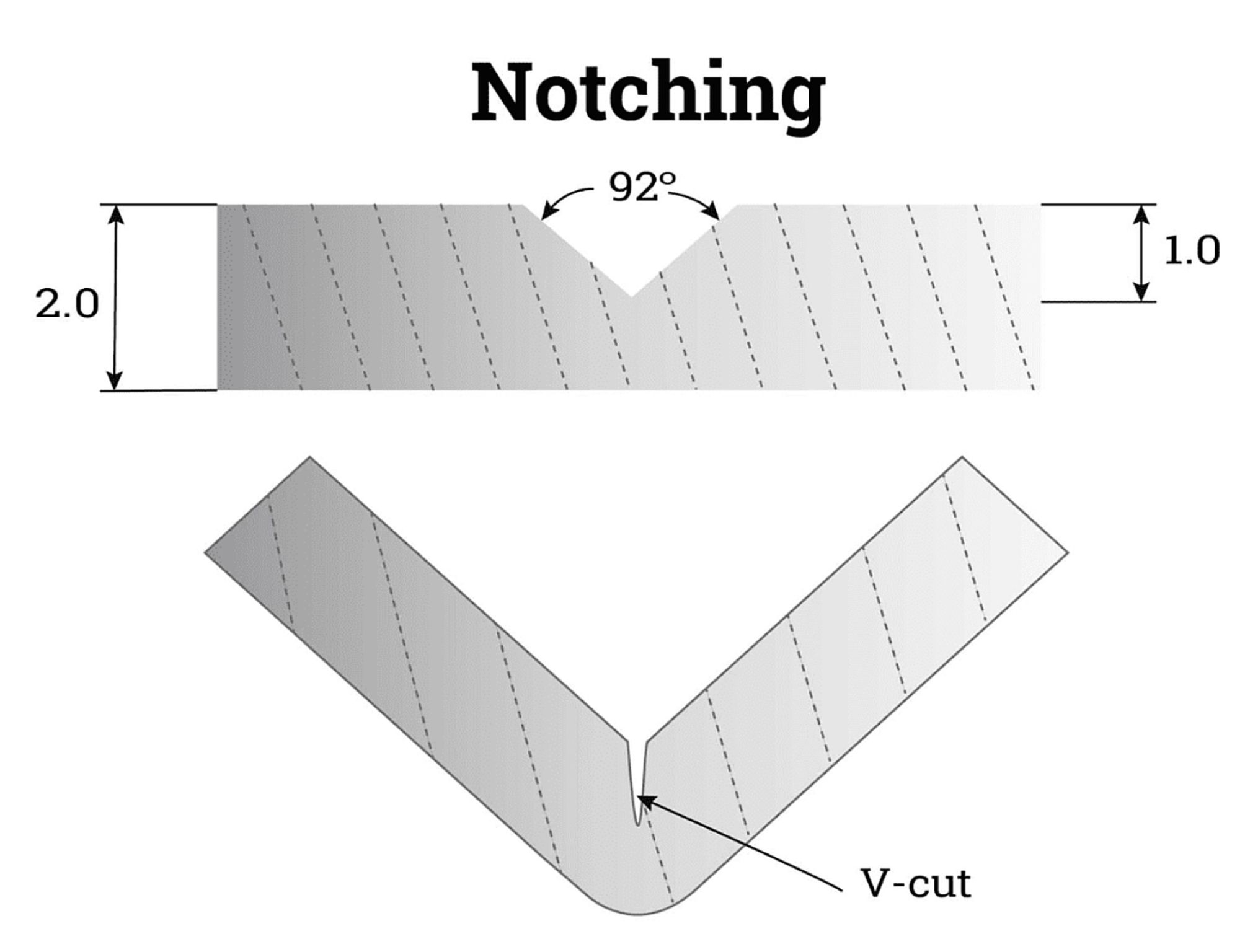
Notching vs. after bending: 92° groove, 1.0 deep in 2.0 plate — the bend is decided here.
That means a surprising share of “bending problems” are really grooving problems. If bent parts are coming out inconsistent, don’t start by blaming the press brake. Start at the groover. Three things decide groove quality — and they decide your bend with it.
Depth control: the number one variable
Inconsistent groove depth is the most common quality complaint in grooving, and it almost always traces to one of three suspects: a dull tool, a workpiece slipping in the clamps, or a Z-axis due for calibration. Check them in that order — tool first, because it’s the cheapest fix.
Depth is what the CNC is really controlling. Modern machines hold micron-level positioning through servo axes with encoder feedback, but that precision is only as good as the mechanical chain beneath it: sharp tool, rigid clamping, calibrated axis. On thin stock, a tenth of a millimeter of extra depth is the difference between a crisp bend and a cracked one.
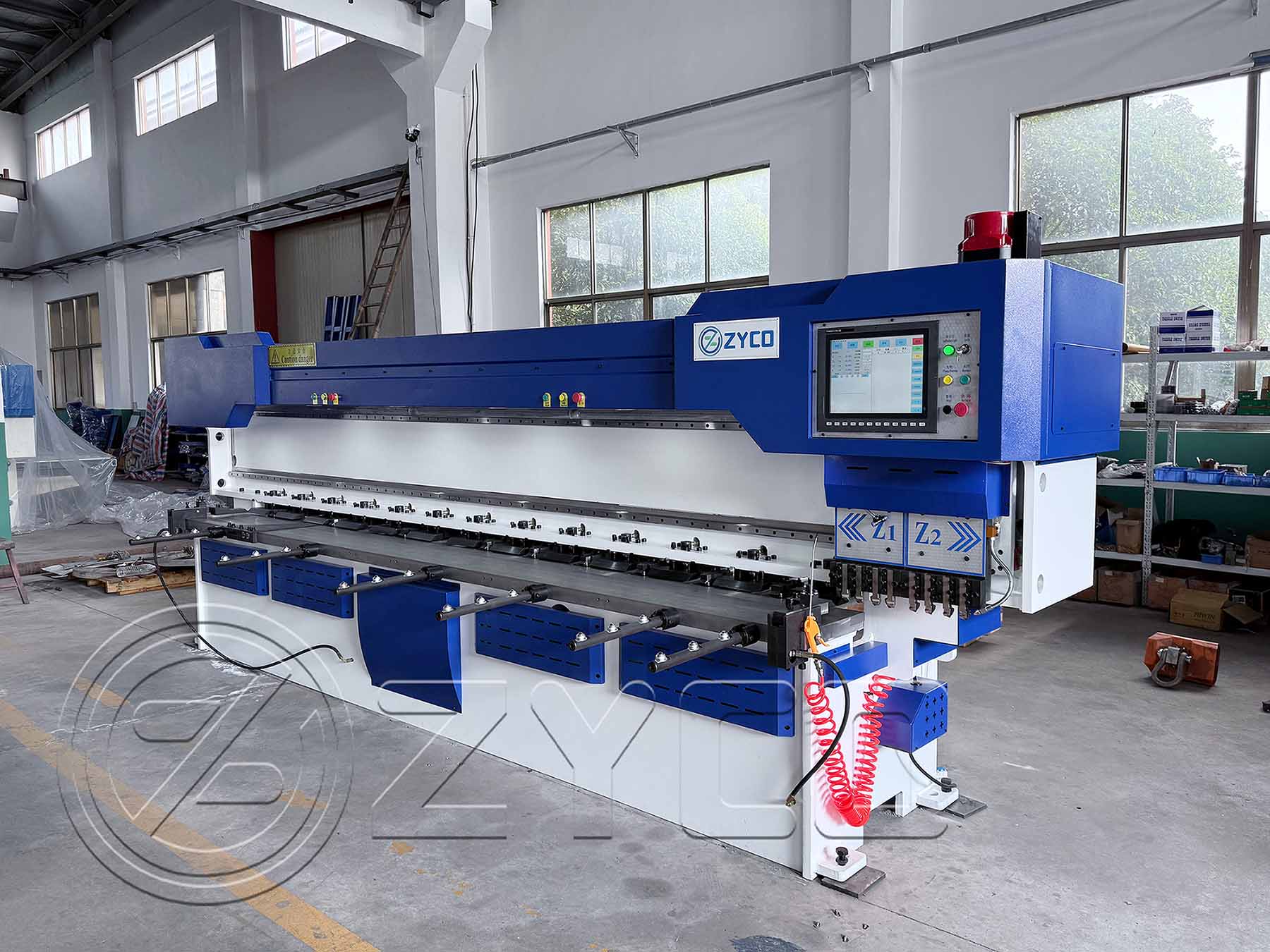
Tooling: sharp cuts, dull tears
The V-knife is where the work happens. A sharp carbide knife slices a clean groove; a dull one tears the material, leaving burrs and rough edges that telegraph straight into the finished bend. Burrs are the tool telling you it’s done — listen.
Match the tool to the job. Harder materials like stainless want tougher carbide grades and shallower multi-pass cuts instead of one aggressive deep pass. Forcing a single deep cut on hard stock is how you chip edges and snap tools. Controlled, incremental cutting costs a little cycle time and saves a lot of tooling.
Clamping: dead still, not deformed
The sheet has to sit dead still through the whole cut — any slip or vibration shows up directly as depth variation and positional error. But there’s a balance: enough pressure to lock the sheet, not so much that you deform thin stock. Keep the jaws clean so they grip without scratching, and watch for air or hydraulic leaks that let pressure sag mid-job.
The discipline around the machine
The machine rewards routine. A daily walk-around — tool check, lubrication levels, chip removal, clamp test, E-stop test — takes five minutes and catches problems while they’re cheap. Operators notice the early signs first: a change in cutting sound, odd chip shapes, a groove that looks slightly off. Build a culture where those observations get reported, not shrugged at.
Deeper maintenance follows a rhythm: weekly cleaning and inspection of guides and ball screws, monthly lubrication per the manufacturer’s chart plus torque checks on critical fasteners (vibration loosens everything eventually), and periodic calibration by a qualified technician with proper instruments. Keep a logbook per machine — date, task, parts replaced, anomalies. Patterns emerge from logs that no single inspection reveals.
When something’s wrong, go simple first
Most grooving faults yield to systematic thinking. Inconsistent depth? Tool, clamping, Z-axis — in that order. Rough or burred edges? Tool condition and cutting parameters. Wrong groove position? Verify the program with a dry run before cutting metal, then check for backlash and encoder issues. Always check the simple things first: loose connections, fluid levels, clogged filters, a guard door left ajar tripping an interlock. Document what you find; the next fault gets easier.
Precision is born at the groover
A press brake can only bend what the groover gives it. Get the groove right — depth, tool, clamping, routine — and the bend takes care of itself. Treat the grooving machine as the precision instrument it is, not as a rough prep step, and your whole bending process gets easier.
Talk to ZYCO’s engineers about V-grooving applications and process setup — the cheapest bend problem is the one you prevent at the groove.