Industrial chillers are widely used in food processing, pharmaceutical storage, chemical production, and other temperature-sensitive applications. However, when a chiller or its water circulation system is installed in a cold warehouse or an unheated area, freezing can become a serious operational risk.
Even when the chiller is switched off, water remaining inside the evaporator, pipes, pumps, or valves may freeze if the surrounding temperature drops below 0°C. As water freezes and expands, it can damage heat exchangers, crack pipelines, damage pump components, and cause unexpected production downtime.
Preventing freezing is therefore not just a matter of adding insulation. It requires a protection strategy that considers the chiller, circulating fluid, external piping, operating schedule, and possible power interruptions.
Quick Answer: How Can You Prevent a Chiller from Freezing?
To prevent a chiller from freezing in a cold warehouse, consider the following measures:
- Add an appropriate glycol-water solution to the chilled water circuit when compatible with the system.
- Insulate exposed water pipes, pumps, valves, and other components.
- Install thermostatically controlled electric heating cables where necessary.
- Maintain circulation through the water circuit when the system is designed for continuous winter operation.
- Drain and properly clear the water circuit if the chiller will remain shut down during freezing conditions.
- Check the manufacturer's minimum ambient operating temperature and freeze protection requirements.
The correct solution depends on the lowest expected ambient temperature, required chilled water temperature, system design, and whether reliable electrical power is available.
Key Takeaways
- Water can freeze in the evaporator and external piping even when the compressor is not running.
- Glycol provides freeze protection, but its concentration must be calculated according to the required protection temperature.
- Pipe insulation alone cannot prevent freezing during prolonged exposure to sub-zero temperatures.
- Circulating water can help prevent freezing, but only when power is reliable and the complete circuit remains open.
- Draining and clearing the system is an important option for long-term winter shutdown.
- Freeze protection must be considered during chiller selection, not added only after installation.
Table of Contents
- Why Can a Chiller Freeze in a Cold Warehouse?
- Use Glycol to Protect the Water Circuit
- Insulate Pipes and Install Heating Cables
- Maintain Water Circulation During Cold Weather
- Drain the Chiller During Long-Term Shutdown
- Check the Chiller's Operating Environment
- Hengde Chiller Selection and Application Experience
- Frequently Asked Questions
1. Why Can a Chiller Freeze in a Cold Warehouse?
A chiller may experience freezing problems for several reasons, especially when it is installed in a refrigerated warehouse, cold storage facility, or unheated equipment room.
- Low ambient temperature: When the temperature surrounding the chiller falls below freezing, water inside exposed pipes, pumps, and heat exchangers may begin to freeze.
- Equipment shutdown: When the chiller stops operating for an extended period, water circulation also stops. Without sufficient freeze protection, stagnant water can gradually reach freezing temperatures.
- Power failure: Some chillers rely on electric heaters or automatic pump operation to reduce freezing risks. If power is interrupted, these protection functions may no longer work.
- Insufficient water flow: Low flow or blocked circulation can create localized cold spots inside the evaporator, increasing the risk of freezing.
It is important to understand that the evaporator is not the only component at risk. External water pipes, valves, filters, pumps, and other accessories can also be damaged.
2. Use Glycol to Protect the Water Circuit
Adding an appropriate glycol-water solution is one of the most common ways to protect industrial chillers against freezing.
Glycol lowers the freezing point of the circulating liquid, allowing the system to operate or remain filled at temperatures below 0°C. The two commonly used types are ethylene glycol and propylene glycol.
However, the choice should not be made based on freezing point alone. Consider the application, toxicity requirements, equipment compatibility, and the glycol manufacturer's recommendations. For food-related facilities, propylene glycol may be preferred where the application requires a lower-toxicity heat transfer fluid, but compatibility and suitability still need to be confirmed.
How should the glycol concentration be selected?
The concentration should be determined according to the lowest expected temperature and the required level of protection. Do not simply add a random amount of antifreeze to the system. For example, if a warehouse may reach -15°C, the glycol solution must be selected to provide an appropriate protection margin below that temperature. The exact concentration depends on the glycol product and whether the design target is freeze protection or burst protection.
There is another important consideration: glycol changes the thermal and hydraulic properties of the circulating fluid. Higher concentrations can reduce heat transfer performance, increase viscosity, and increase pump pressure requirements. The chiller capacity and pump selection may therefore need to be adjusted.
Practical recommendation: Use a suitable concentration chart from the glycol supplier and verify the mixture with an appropriate refractometer. Also confirm that the chiller manufacturer approves the selected fluid and concentration.
3. Insulate Pipes and Install Heating Cables
Insulation is an essential part of winter freeze protection, particularly when water pipes pass through cold storage rooms or outdoor areas.
Proper insulation slows down heat loss and helps maintain the temperature of the circulating liquid. However, insulation does not generate heat. If the surrounding temperature remains below freezing for a long period, an insulated pipe can eventually become cold enough for water to freeze.
For systems exposed to sub-zero temperatures, consider combining insulation with thermostatically controlled electric heating cables.
Pay particular attention to:
- Chilled water supply and return pipes.
- Evaporator inlet and outlet connections.
- Water pumps and filter housings.
- Valves, elbows, and pipe joints.
- Drain points and other areas where water may remain trapped.
Heating cables should be suitable for the installation environment and controlled according to the expected temperature conditions. They should be installed under suitable insulation in accordance with the manufacturer's instructions and applicable electrical safety requirements.
Important: Insulating only the main water pipes while leaving valves, pump bodies, and exposed connections unprotected can create weak points in the system.
4. Maintain Water Circulation During Cold Weather
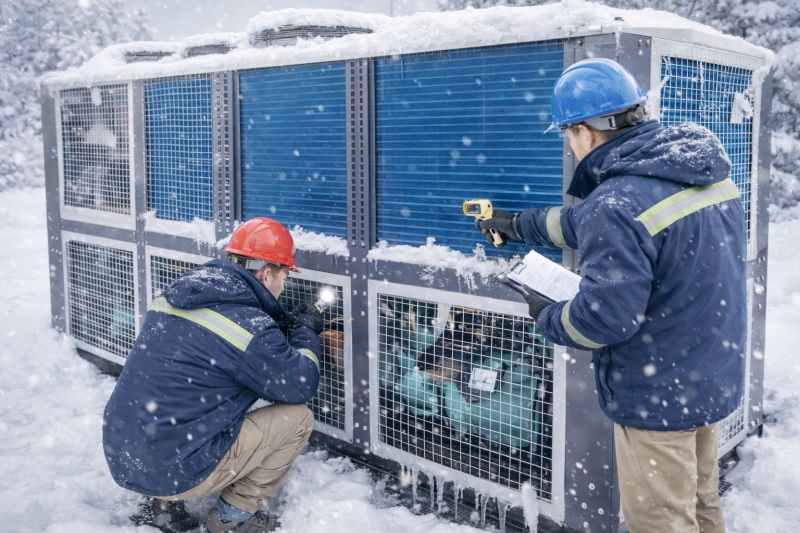
Continuous or automatic water circulation can help reduce freezing risks because moving water is generally less likely to develop localized ice formation than stagnant water under the same conditions.
Some industrial chiller control systems can start the water pump when the water temperature approaches a preset freeze protection threshold.
However, this method has limitations. The pump must have a reliable power supply, the control system must remain functional, and water must be able to circulate freely throughout the protected circuit.
Before relying on pump circulation, check the following:
- The water pump is controlled by the chiller or an appropriately designed control system.
- Isolation valves remain in the correct open position.
- There are no blocked pipes or closed valves preventing circulation.
- The pump and external piping are also protected against freezing.
- Backup power or an alternative protection method is available if power interruption is possible.
Circulation alone should not be treated as a complete freeze protection strategy where power reliability cannot be guaranteed.
5. Drain the Chiller During Long-Term Shutdown
If a chiller will not be used during winter and the water circuit is exposed to freezing temperatures, draining the system may be an appropriate solution.
However, simply opening one drain valve is not always enough. Water can remain trapped inside the evaporator, pump casing, low points in the piping, and other equipment components.
A proper shutdown procedure should include:
- Stop the chiller according to the manufacturer's shutdown procedure.
- Isolate the power supply and follow the required electrical safety precautions.
- Drain the evaporator, pump, and connected water pipelines using the designated drain points.
- Clear remaining water from areas where liquid may be trapped, using an approved procedure.
- Verify that no water remains in components exposed to freezing conditions.
Be aware that leaving a water circuit empty for a long time may increase corrosion risks in some systems. The manufacturer's recommendations for storage, corrosion protection, and restart procedures should be followed.
Never assume that a partially drained system is safe. Even a small amount of trapped water can expand and damage a heat exchanger or pipe.
6. Check the Chiller's Operating Environment
Before installing a chiller in a cold warehouse, confirm that its design is suitable for the actual ambient conditions.
Different chiller models have different minimum ambient operating temperatures. An ordinary industrial chiller may not be suitable for installation in an environment where the temperature remains far below 0°C. For air-cooled chillers, low ambient temperatures can also affect refrigerant condensing pressure and system control. Special low-ambient configurations may be required depending on the model and operating conditions.
When discussing a project with a chiller manufacturer, provide the following information:
- Minimum and maximum ambient temperatures around the chiller.
- Required chilled water outlet temperature.
- Required cooling capacity.
- Whether the chiller operates continuously or intermittently.
- Whether the water pipes are installed inside or outside the cold warehouse.
- Whether glycol will be used in the circulating system.
- Whether reliable power is available during shutdown periods.
One detail is particularly important: the lowest chilled water outlet temperature and the lowest ambient temperature are two different design conditions. A chiller designed to produce low-temperature water is not automatically suitable for operation in an extremely cold equipment room.
7. Hengde Chiller Selection and Application Experience
Nanjing Hengde Electrical Equipment Co., Ltd. is an industrial temperature-control equipment manufacturer established in 2010. The company specializes in the design, manufacturing, sales, and service of industrial chillers, mold temperature controllers, and related temperature-control equipment.
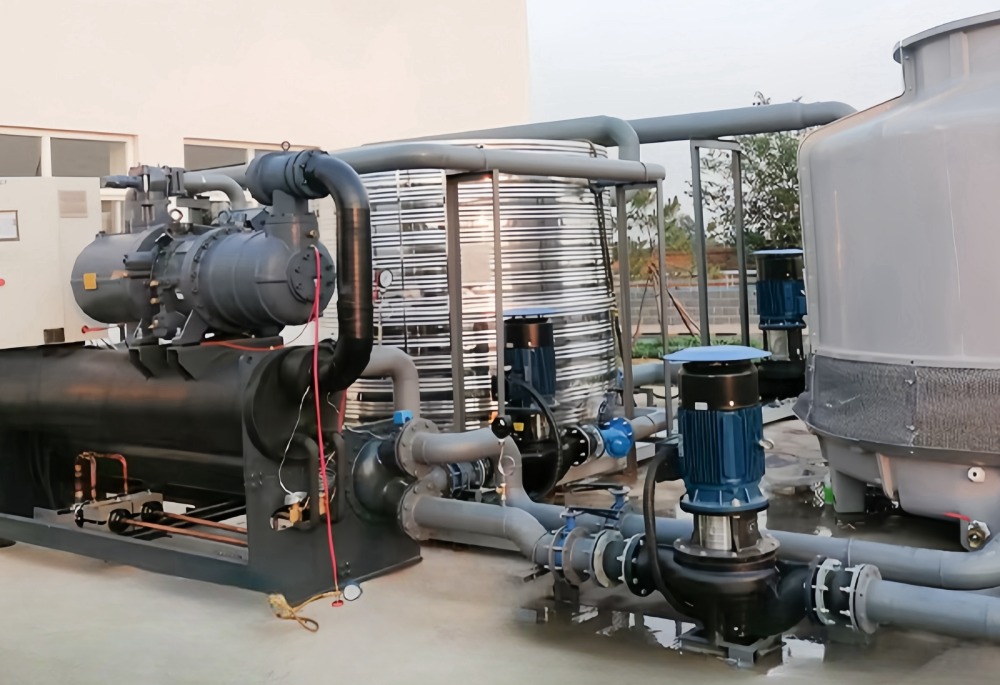
Hengde supplies air-cooled chillers, water-cooled chillers, scroll chillers, screw chillers, and low-temperature chillers for different industrial applications. Available products include small-capacity process cooling units as well as larger industrial cooling systems.
For example, Hengde's HC-20W is a 60 kW (20 HP / approximately 15-ton) water cooled chiller. It is one product reference within the company's industrial chiller range. Its suitability for a particular cold-warehouse installation must be evaluated against the actual ambient temperature, chilled water requirements, and freeze protection arrangement.
Hengde also offers low-temperature chiller models such as the HL-03AL, a 3HP air cooled low temperature chiller with a specified low-temperature application down to -25°C. This figure refers to the low-temperature cooling application, not a guaranteed minimum ambient operating temperature. The actual operating limits must be confirmed from the model's technical documentation.
Hengde Engineering Insight:In cold warehouse projects, we recommend evaluating the entire water circulation system instead of focusing only on the chiller itself. A well-selected chiller can still suffer freeze damage if the external pipes, pump, or valves are left unprotected. In many cases, the weakest unprotected section of the water circuit determines the reliability of the whole system.
If you are planning to install an industrial chiller in a cold storage facility, Hengde can help evaluate the cooling requirements and discuss suitable equipment configurations.
Visit Hengde's official website to learn more about our industrial cooling solutions.
8. Frequently Asked Questions
Q1: Can a chiller freeze if it is switched off?
Yes. If water remains inside the evaporator, pipes, or pump and the surrounding temperature drops below freezing, ice can form even when the compressor is not running. A shutdown freeze protection plan is essential.
Q2: Is glycol enough to prevent a chiller from freezing?
Glycol can provide effective freeze protection when the correct type and concentration are selected. However, the solution must be compatible with the chiller and process. External components and other connected circuits may also need separate protection.
Q3: Can pipe insulation alone prevent freezing?
No. Insulation slows heat loss but does not produce heat. During prolonged exposure to sub-zero temperatures, additional measures such as glycol, heating cables, circulation, or draining may be necessary.
Q4: Should I keep the chiller running throughout winter?
Not necessarily. The correct approach depends on the chiller design, operating schedule, ambient temperature, and freeze protection configuration. Continuous operation or pump circulation should only be used when the manufacturer confirms that the system is suitable for it.
Q5: What should I do if the warehouse may experience a power failure?
Do not rely solely on electric heaters or automatic pump circulation. Consider an appropriately formulated glycol solution or a complete draining procedure for periods when the system will be exposed to freezing conditions without power.
Q6: Does a low-temperature chiller automatically have freeze protection?
No. A low temperature chiller is designed to provide a particular chilled fluid temperature range. Its ability to withstand low ambient temperatures and protect its water circuit against freezing must be checked separately.
Conclusion
Preventing a industrial chiller from freezing in a cold warehouse requires more than one protective measure. Glycol, insulation, heating cables, water circulation, and proper drainage all have important roles, depending on the installation and operating conditions.
The most reliable approach is to plan freeze protection before the chiller is installed. By considering the lowest ambient temperature, water temperature, piping layout, operating schedule, and possible power interruptions, manufacturers and users can reduce the risk of frozen pipes, damaged evaporators, and costly downtime.
Looking for the Right Industrial Cooling and Heating Solution? Contact Hengde to discuss your cooling capacity, water temperature, and installation environment.